
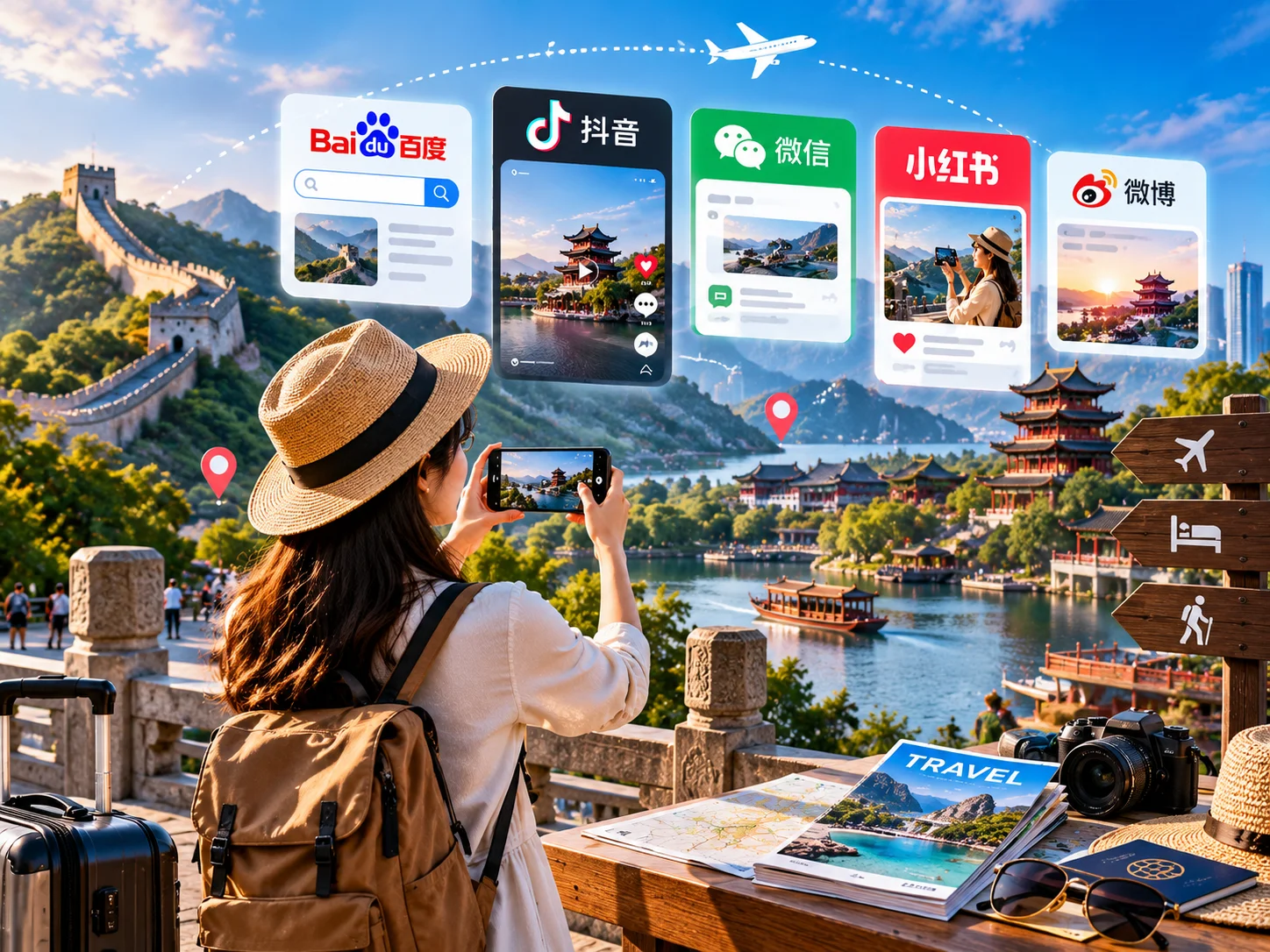
Chinese travellers often begin forming opinions about a destination, hotel, attraction or tour long before they speak to a sales team. They search, watch short videos, read social posts, compare comments and look for signs that a business understands their needs. For Tourism & Travel Businesses, visibility on the platforms Chinese audiences actually use is therefore a practical part of winning attention and trust.
A strong approach is not simply a translated website or a few posts in Mandarin. China has its own digital ecosystem, with platforms such as Baidu, WeChat, Douyin, Xiaohongshu and Weibo playing different roles in search, content, community and brand awareness. A travel company needs to match its message, content format and customer journey to those channels. This article explains how travel companies can build that presence, improve search visibility, create useful localised content and turn digital interest into genuine enquiries.
Why a China-Focused Online Strategy Matters for Travel Companies
A travel business may already perform well on Google, Instagram or Facebook, yet that does not mean the same online setup will work equally well for customers in China. The Chinese market uses different platforms, follows different content habits and operates under different technical and regulatory conditions.
This changes the role of travel marketing. Instead of treating China as one more location in an international campaign, companies need a market-specific plan. Search visibility, social content, website access, paid media and reputation signals should all support the same customer journey.
The website of GUANGZHOU XIYOU DIGITAL SERVICES CO. LTD notes that China’s digital ecosystem includes Baidu, WeChat, Weibo, Douyin, Xiaohongshu, Tmall and JD, with different algorithms, formats and audience expectations across each platform. It also highlights the importance of localisation, mobile-first behaviour, social influence and trust in Chinese digital activity.
For travel brands, a customer may first see a short destination video, later search on Baidu and then read social posts before making contact. Each touchpoint needs to feel consistent.
Build Visibility Where Chinese Travellers Search
Search remains important because travel decisions involve questions. People want to know what a destination is like, what a hotel offers, where an attraction is located, what an itinerary includes and how a service fits their trip.
Create Baidu-Friendly Destination and Service Pages
A website built only around Google SEO can miss part of the Chinese search journey. Baidu has its own search environment and requires a localised SEO approach. The company’s website describes China SEO around keyword research, on-page work, link building, technical optimisation and content designed for Chinese search intent. It also states that Baidu search visibility can support both traffic and brand credibility.
For Tourism & Travel Businesses, useful Baidu-focused pages could cover:
- destination guides linked to the company’s actual services;
- hotel, resort or tour information in clear Mandarin;
- attraction or activity pages;
- itinerary explanations;
- practical answers about the travel experience;
- location-specific pages for major routes or destinations.
The aim is not to fill pages with repeated keywords. Each page should answer a real question and make the next step clear.
Match Content to Search Intent
Someone searching for a destination guide is not at the same stage as someone searching for a specific hotel, package or tour. Content should reflect that difference.
Research-led pages can answer early questions, while service pages explain the offer and enquiry pages make contact simple. This improves travel marketing because content follows what the traveller wants to know rather than what the business wants to say.
Localise the Message Instead of Translating It Word for Word
Direct translation can preserve the literal meaning of a sentence while losing the tone that makes it persuasive or trustworthy. The source website specifically warns that direct translation may feel stiff or fail to reflect cultural context. It recommends adapting tone, examples and language so content feels natural to Chinese readers.
Travel content depends on context. A luxury resort page should not read like a technical brochure, and a family holiday page should answer different concerns from a business travel page.
Good localisation can cover:
- natural Mandarin copy rather than literal translation;
- destination descriptions that explain the actual experience;
- platform-specific captions and headlines;
- localised calls to action;
- visuals that match the message on each platform;
- clear information that reduces uncertainty before an enquiry.
For Tourism & Travel Businesses, localisation also means keeping important details consistent. If the itinerary, room category, attraction access or service scope changes, Chinese-language content should be updated at the same time as the main website.
Use WeChat to Support Ongoing Customer Communication
WeChat is more than a messaging channel. The source website describes it as an ecosystem that can support official accounts, mini-programmes and community building.
That makes it useful for travel companies that need repeated contact with potential customers. A traveller may not enquire after seeing one post. They may need several useful interactions before they feel comfortable taking the next step.
A WeChat presence can support destination updates, service information, helpful content and direct communication. The main point is consistency. Constant promotions are easy to ignore; useful information gives people a reason to stay connected.
Use Xiaohongshu for Visual Travel Inspiration and Trust
Travel is naturally visual. People want to see what a place looks like, how an experience feels and what they might actually do there. Xiaohongshu is well suited to this behaviour because it combines lifestyle content, user-style recommendations and visual storytelling. The source website describes the platform as especially relevant to lifestyle inspiration, user-friendly reviews and authentic recommendations.
A travel company can use this format for more than polished destination photographs. Topics may include a trip outline, room categories, food experiences, local attractions or practical tour details.
The strongest content should answer a specific question while still being visually appealing. A post titled around what a three-day city stay actually includes is more useful than a vague destination caption.
This is also where travel marketing can become more credible. Instead of presenting every destination as perfect, content can focus on who the experience suits, what it includes and what a traveller should expect.
Use Douyin for Short, Clear Destination Storytelling
Douyin gives travel brands a format for fast visual communication. The source website identifies Douyin as a short-video platform that can support broad awareness and quick engagement.
Short travel videos work best when each has a clear point. A video could show a hotel route, resort atmosphere, room tour, activity, food experience or one part of an itinerary.
Trying to show an entire holiday in one video can feel rushed. A short series is easier to follow and can answer different questions. Open with the place, experience or useful detail, add readable captions and keep the edit focused.
Use Paid Campaigns to Support Search and Social Activity
Organic visibility takes time. Paid campaigns can help travel companies reach relevant audiences while longer-term search and content work develops.
The company website lists PPC activity across platforms including Baidu, WeChat and Douyin, alongside campaign tracking and ongoing optimisation. It also presents paid search and social media as part of a wider digital strategy rather than isolated activity.
For travel companies, paid activity can support destination launches, seasonal campaigns, specific packages, events or routes. Campaigns should lead to a page that matches the ad. If an advert promotes a particular destination, sending visitors to a general homepage creates unnecessary friction.
Good paid travel marketing also requires measurement beyond clicks. The business should track meaningful actions such as enquiry starts, contact requests, lead quality or another relevant conversion point available in its setup.
Make the Website Easy to Use for Chinese Visitors
Marketing can bring the right visitor to a website and still fail if the site is slow, unclear or difficult to use on mobile. The source website highlights fast, responsive, mobile-friendly web development as part of its service offering. It also notes that international brands may need to consider hosting, ICP licensing and other digital compliance requirements for China.
For Tourism & Travel Businesses, the website should make essential information easy to find. Visitors should quickly understand what the company offers, which destinations it covers, what is included, how to ask a question and where to go next.
A practical page structure can include a strong destination heading, a short summary, key experience details, itinerary or service information, useful images, FAQs and a clear enquiry path.
Mobile usability deserves particular attention. Buttons should be easy to tap, text should be readable without zooming, and large media files should not make key pages unnecessarily heavy.
Build Trust Through Consistent Brand Information
Travel involves money, time and personal plans, so customers often look for reassurance before they enquire. Inconsistent names, outdated pages or different service descriptions across channels can create doubt.
The source website places brand management and online reputation management within its China digital services. It also emphasises consistent messaging across local channels and content that builds long-term brand value.
Travel companies should regularly review their website, social accounts and paid landing pages to make sure the same core information appears everywhere. This includes the company name, service scope, destination details, contact information and current offer wording.
Clarity also supports credibility. A page that plainly explains what is included is more useful than one packed with broad claims.
Create Content Around Real Travel Questions
Posting only offers quickly narrows the content plan. A better structure follows the research journey: inspiration, destination research, comparison, planning and enquiry. This gives each channel a clearer role.
Possible topics include:
- what to expect from a specific destination;
- how an itinerary is structured;
- differences between two travel experiences offered by the company;
- hotel or resort features;
- seasonal information that the business can verify;
- local activities included in a package;
- practical preparation points connected to the service;
- answers to common questions received by the sales team.
GUANGZHOU XIYOU DIGITAL SERVICES CO. LTD states that its content work includes Mandarin website content, Chinese copywriting, Baidu-focused content and social media content for platforms including WeChat, Xiaohongshu, Zhihu and Douyin.
That channel-specific approach matters because one article should not simply be copied everywhere. A Baidu page can provide depth. A Douyin video can show one experience. A Xiaohongshu post can combine visual context with practical notes. WeChat can support a longer relationship with the audience.
Track Enquiries, Content Performance and Campaign Quality
Traffic alone does not show whether a China strategy is working. Travel companies need to connect visibility with actions that matter to the business.
The source website describes campaign execution, ongoing optimisation, reporting, tracking and ROI measurement as part of its process.
Useful reporting should separate channels and objectives. Search content may be judged through visibility, relevant traffic and enquiry contribution. Social activity may be assessed through engagement, account growth and visits to service pages. Paid campaigns need closer attention to conversion actions and lead quality.
This prevents a common problem: continuing activity because the numbers look busy rather than because it is helping commercial goals.
Reports should also show which destinations, pages or content themes are producing meaningful interest. That can guide future campaigns and reduce wasted effort.
Common Mistakes That Limit Reach in China
A China-focused strategy can lose effectiveness when the business treats local platforms as copies of Western channels.
One mistake is relying on direct translation. Another is publishing the same post on every platform without adapting the format. Travel companies can also weaken results by sending paid traffic to unrelated pages, leaving Chinese-language pages outdated, or focusing on follower counts while ignoring enquiries.
A further issue is running separate search, social, content and paid campaigns with no connection between them. Each channel should support the same customer journey.
The website should answer detailed questions. Search should help people find those answers. Social content should create interest and proof. Paid media can increase reach. Follow-up channels can keep the relationship active.
A Practical Digital Framework for Tourism & Travel Businesses
A useful China strategy can be organised into four connected parts.
First, establish the technical base: a mobile-friendly website, relevant Chinese-language pages, suitable hosting and any necessary compliance work.
Second, build search visibility through Baidu-focused SEO and useful content based on customer intent.
Third, maintain active social content across the platforms that fit the brand and audience, using formats designed for each channel rather than repeating identical posts.
Fourth, add paid campaigns where they can support a defined objective, then track enquiries and campaign quality closely.
This creates a more coherent travel marketing system. Search, content, social media, paid activity and the website all support one another instead of competing for attention.
FAQs
1.Which Chinese digital platforms are most relevant for travel companies?
Baidu, WeChat, Xiaohongshu and Douyin can all play useful roles. Baidu supports search visibility, WeChat supports communication and community activity, Xiaohongshu suits visual lifestyle content, and Douyin supports short-form video. The right mix depends on the company’s audience, destinations and objectives.
2.Is translating an English travel website into Mandarin enough?
No. Translation handles language, but localisation also considers tone, search behaviour, platform expectations and cultural context. Content should read naturally and answer the questions Chinese customers are likely to ask.
3.Can a travel company use the same content on every Chinese platform?
The main message can stay consistent, but the format should change. A detailed search page, a short video and a visual social post serve different purposes. Reworking the idea for each platform usually produces a clearer user experience.
4.How can travel companies measure online performance in China?
Track metrics that connect marketing activity to business goals. Depending on the channel, that can include search visibility, relevant website visits, engagement, enquiry actions, lead quality and campaign conversion data.
5.Why does mobile website performance matter?
Chinese digital behaviour is strongly mobile-led, and many social interactions happen on mobile devices. A travel page that loads poorly, uses hard-to-read text or makes enquiry steps difficult can lose interest even when the marketing campaign itself performs well.
Build a Chinese Customer Journey, Not Just a Campaign
Attracting more Chinese customers online requires more than adding Mandarin copy to an existing international strategy. Travel companies need local search visibility, platform-specific content, a mobile-friendly website, consistent brand information and a clear way to measure enquiries.
For Tourism & Travel Businesses, the strongest approach connects Baidu, WeChat, Xiaohongshu, Douyin, localised content and paid media around the same customer journey. When each channel has a defined role and the information remains clear across every touchpoint, the business is better placed to earn attention, answer questions and turn interest into qualified enquiries.