
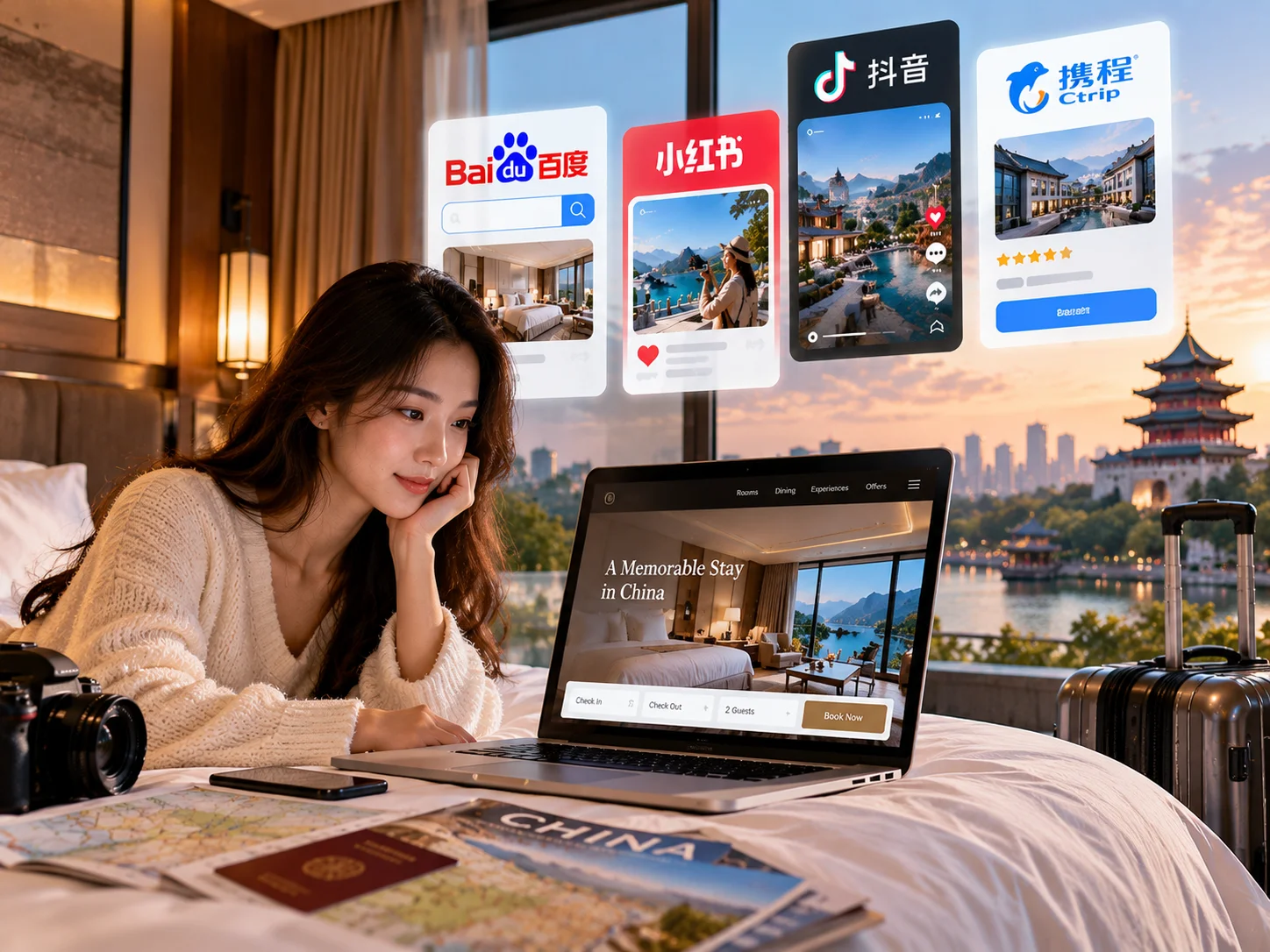
Attracting Chinese travellers is one thing. Getting them to book directly through a hotel’s website is another challenge. Many international hotels appear on popular travel platforms but struggle to bring those visitors to their own booking channels.
Chinese travellers often research destinations, compare accommodation and read guest experiences through platforms such as Xiaohongshu, WeChat and Ctrip. A hotel may offer excellent rooms and services, yet still lose direct reservations if guests cannot find reliable information or complete a booking easily.
For businesses in the Hotels & Hospitality sector, understanding these habits is essential. Effective hotel marketing must connect Chinese travellers with relevant information, build confidence and provide a simple reservation process.
This article explains how hotels can improve visibility in China, reduce dependence on third-party booking platforms and encourage more guests to reserve directly.
Why Do Chinese Travellers Often Book Hotels Through Third-Party Platforms?
Chinese travellers frequently use established travel platforms because they bring accommodation options, prices, reviews and booking information together.
Ctrip, Qunar and Fliggy are among the platforms that hotels may consider when targeting customers in mainland China. These services allow travellers to compare properties without visiting several individual hotel websites.
The challenge for hotels is that third-party platforms manage much of the booking experience and customer relationship.
Direct reservations give hotels more control over communication, reservation details and opportunities to build repeat business. They can also reduce distribution costs, although payment processing and direct acquisition expenses still apply.
Hotels should therefore focus on two connected goals: maintaining visibility on relevant travel platforms while giving potential guests a practical reason to book through the hotel’s own channels.
What Hotels & Hospitality Businesses Should Understand About Chinese Travellers
Chinese travellers do not all follow the same booking habits. A family arranging an overseas holiday may have different requirements from a business traveller attending a conference.
Before investing in advertising, hotels need to understand which customer groups match their location, accommodation and available services.
Identify the Most Relevant Guest Segments
A hotel can divide its potential Chinese audience into groups such as:
- Family travellers: May prioritise room capacity, nearby attractions, breakfast options and transport convenience.
- Business travellers: Often need reliable internet, accessible transport and clear invoicing information.
- Couples: May compare room quality, privacy, dining facilities and local experiences.
- Independent travellers: Often research accommodation through social platforms and detailed guest reviews.
- Group travellers: May require coordinated reservations, flexible arrangements and clear communication.
These differences should influence the hotel’s content, advertising and booking information.
For example, a city hotel near an exhibition centre may benefit from promoting transport access and business facilities. A beach resort may need to provide more information about nearby attractions, family accommodation and seasonal conditions.
Build a Chinese-Language Website That Supports Direct Reservations
A hotel website may look professional to an international audience but still create difficulties for visitors from mainland China.
English-only content, slow loading times and unclear reservation instructions can discourage potential guests from completing bookings.
Provide Accurate Simplified Chinese Content
A Chinese-language website should do more than translate the homepage.
Travellers need to understand room categories, accommodation policies, facilities and the total cost of their stay.
Important information includes:
- Room sizes, bed types and maximum occupancy.
- Hotel location and access to transport.
- Breakfast arrangements and available dining facilities.
- Check-in and check-out times.
- Cancellation, refund and deposit policies.
- Additional fees and applicable taxes.
- Accepted payment methods and booking confirmation procedures.
Translations should sound natural to Mandarin-speaking readers. Literal translations may fail to explain services clearly or may create confusion about reservation conditions.
Make the Booking Process Mobile-Friendly
Hotels should test the entire reservation process on mobile devices, not just the homepage.
Guests must be able to view availability, compare room rates and complete payment without unnecessary steps.
A useful booking experience includes a visible reservation button, simple date selection, clear pricing and an understandable confirmation message.
Hotels targeting mainland China should also assess website performance from within China. A website that loads quickly elsewhere may not provide the same experience for Chinese visitors.
Improve Hotel Visibility Through Baidu SEO
Baidu is an important search platform for businesses seeking visibility among Chinese internet users.
International hotels that rely only on Google rankings may miss people searching for overseas accommodation through Chinese search services.
A focused hotel marketing strategy should include relevant Mandarin search terms linked to the hotel’s destination, location and accommodation type.
Create Pages Around Specific Travel Searches
Instead of targeting only broad terms such as hotels in a particular city, properties can create useful pages for more specific needs.
Potential topics include accommodation near an airport, family-friendly hotels in a destination, hotels close to exhibition centres and properties near well-known attractions.
Each page should answer the searcher’s question clearly.
For example, a hotel near a railway station can explain the actual distance, available transport and approximate travel arrangements instead of simply calling its location convenient.
Technical SEO also matters. Hotels should review page indexing, mobile usability, internal links, website structure and page loading performance.
Use Xiaohongshu to Build Interest Before Travellers Book
Xiaohongshu, also known as RedNote, plays an important role in how many Chinese travellers research destinations and accommodation.
People use the platform to examine photographs, read experiences and assess whether a property suits their plans.
Hotels can use this behaviour to present useful information rather than relying entirely on promotional advertisements.
Publish Content That Answers Guest Questions
A practical hotel marketing approach on Xiaohongshu could include:
- Genuine photographs showing rooms and common areas.
- Short videos explaining the hotel’s surroundings.
- Information about nearby restaurants and attractions.
- Details about transport from airports or stations.
- Posts addressing common questions from international guests.
- Seasonal travel advice relevant to the property’s destination.
Content should reflect what guests can actually expect.
Hotels may also work with Chinese travel creators whose audiences match their target customers. However, creator partnerships should be assessed through audience relevance, engagement quality and clear commercial terms.
Where appropriate, hotels can guide interested users towards official reservation information while respecting platform rules.
Use WeChat to Support Enquiries and Direct Bookings
WeChat offers opportunities for hotels to communicate with potential guests and maintain contact beyond their initial enquiry.
Through suitable official account arrangements, hotels can publish information, respond to customer questions and provide access to reservation channels.
WeChat Mini Program booking functions may also be considered where technical integrations, account eligibility and payment arrangements permit them.
Help Guests Move From Enquiry to Reservation
A guest who sees hotel content on another platform may still have questions before booking.
They might want to confirm airport transfers, request an additional bed or understand the cancellation terms.
Clear Mandarin-language communication can help resolve these concerns.
Hotels should provide a direct route to the reservation team, maintain consistent responses and explain how confirmed bookings are processed.
WeChat can also support communication after the reservation, including arrival instructions and relevant service information, provided guests have consented to the messages.
The main goal is to make communication useful, accessible and reliable.
Give Chinese Travellers a Clear Reason to Book Directly
Having a booking website does not automatically persuade travellers to use it.
Guests who find the same room on a familiar travel platform may remain there unless the direct booking option offers a meaningful advantage.
Hotels can consider direct reservation benefits that fit their operations and commercial policies.
Examples include:
- Flexible cancellation conditions on eligible rates.
- Complimentary breakfast for selected packages.
- Access to special accommodation packages.
- Direct communication about room preferences.
- Loyalty benefits for returning guests.
- Clear information about available room categories.
Such benefits should be genuine and clearly explained.
Hotels must also review contractual obligations with distribution partners before introducing direct-only rates or promotional conditions.
The strongest offer is not always the lowest price. Clear policies, dependable communication and useful inclusions can influence booking decisions.
Make Payments and Booking Confirmations Easier
Payment difficulties can stop a reservation even after a guest has selected a room.
Some Chinese travellers prefer familiar digital payment methods such as Alipay or WeChat Pay. However, availability depends on the hotel’s location, payment provider and supported cross-border services.
Hotels should assess whether these options can be offered through an authorised payment partner.
For Hotels & Hospitality businesses, payment convenience must work alongside clear financial information.
Remove Uncertainty From the Final Booking Steps
Before confirming a reservation, guests should understand exactly what they are paying.
Hotels should clearly communicate the booking currency, taxes, payment timing and any additional charges.
If prices are displayed in Chinese yuan for reference, the website should explain which currency is charged and whether the final amount may vary due to exchange rates.
Confirmation messages should contain the guest’s name, stay dates, accommodation type, payment status and reservation reference.
A Mandarin-language confirmation, where available, can make these details easier to understand.
Hotels should also provide a reliable contact method if a payment fails or a reservation needs to be amended.
Build Confidence Through Reviews and Accurate Hotel Information
Chinese travellers often look for reassurance before reserving accommodation in an unfamiliar destination.
Photographs alone may not answer questions about safety, service quality or the actual condition of a property.
Hotels should ensure that their official website, Chinese social media profiles and travel platform listings present consistent information.
Encourage Genuine Guest Feedback
Reviews can help future visitors understand what a stay is actually like.
Hotels may invite guests to share honest experiences through relevant platforms, without requiring positive ratings or offering misleading incentives.
Management responses should address concerns professionally and provide practical explanations where appropriate.
A complaint about transport access, for instance, can reveal information that should be made clearer on the hotel’s website.
Hotels should also keep photographs and facility descriptions current.
If a property offers Mandarin-speaking assistance only during certain hours, those limits should be stated rather than implying that the service is available at all times.
Use Travel Platforms Without Becoming Fully Dependent on Them
Direct booking growth does not require hotels to abandon online travel agencies.
Platforms such as Ctrip can introduce properties to customers who may not know the hotel’s name or website.
Hotels can treat these channels as part of a broader distribution strategy while developing their own reservation capabilities.
The key is to maintain consistent property information across channels and communicate the value of the official website independently.
For repeat guests, hotels can explain direct reservation options through permitted post-stay communication and loyalty programmes.
Hotels working with Chinese travel agencies should also maintain accurate sales materials, room information and contact details.
This balanced approach helps properties serve different booking preferences without relying entirely on one channel.
Plan Campaigns Around Chinese Travel Periods
Chinese holiday periods can affect when travellers research and reserve overseas accommodation.
Hotels should consider occasions such as the Spring Festival, Labour Day holidays, summer school holidays and National Day Golden Week.
Demand will vary according to the destination, flight availability, travel restrictions and the hotel’s target audience.
A useful hotel marketing calendar should therefore reflect the property’s actual booking patterns rather than assuming every holiday creates the same opportunity.
Hotels can prepare Mandarin-language destination guides, seasonal room packages and relevant social content ahead of important travel dates.
Campaigns should begin early enough to reach guests while they are planning, not only when they are about to depart.
Reviewing previous booking lead times can help determine when promotional activity should start.
Measure Which Channels Generate Direct Reservations
Website visits and social media engagement provide useful information, but they do not establish whether a campaign generates profitable bookings.
In Hotels & Hospitality, measurement should connect marketing activity with reservation outcomes.
Hotels can monitor several indicators:
- Direct booking conversion rate: The share of eligible website visits that result in reservations.
- Booking engine abandonment: Where visitors leave before completing payment.
- Cost per acquired booking: The marketing expense linked to confirmed reservations.
- Direct booking revenue: Revenue generated through hotel-owned reservation channels.
- Cancellation rate: The share of reservations cancelled after confirmation.
- Repeat booking rate: The proportion of returning guests who reserve again.
These figures can help hotels identify which channels attract useful enquiries and where guests face difficulties.
Tracking should account for applicable privacy requirements and the limitations of individual platforms.
Hotel teams should also review customer questions and reservation feedback. A repeated enquiry about payment conditions may indicate a website issue that needs attention.
How Professional Chinese Digital Marketing Support Can Help Hotels
Building a stronger presence in China may require local language skills, familiarity with Chinese platforms and technical website improvements.
GUANGZHOU XIYOU DIGITAL SERVICES CO. LTD provides services including Chinese content marketing, search engine optimisation, social media marketing, paid advertising and website development.
These services can support hotels seeking to communicate more effectively with Chinese audiences and improve their digital presence.
However, direct booking performance also depends on the hotel’s reservation system, pricing, guest services and operational capabilities.
The most useful approach connects marketing activity with a booking process that guests can understand and trust.
Frequently Asked Questions
1. How can hotels attract Chinese tourists without depending entirely on OTAs?
Hotels can build visibility through Baidu, Xiaohongshu and WeChat while offering a Mandarin-language website with direct reservation facilities. Useful destination content, genuine reviews and clear booking terms can encourage interested guests to contact the hotel or reserve through official channels.
2. Is a Chinese-language hotel website necessary for direct bookings?
It is not compulsory, but it can help Mandarin-speaking guests understand accommodation details and booking policies. Hotels should prioritise accurate translations of room information, prices, cancellation conditions and reservation instructions rather than translating promotional content alone.
3. Which Chinese social media platform is most useful for hotels?
The answer depends on the target audience and campaign objective. Xiaohongshu is useful for travel research and guest experiences, while WeChat can support enquiries and ongoing communication. Douyin may also help properties present accommodation through short-form videos.
4. Can overseas hotels accept Alipay and WeChat Pay?
Some overseas hotels can accept these payment methods through supported payment providers. Availability varies by country, merchant arrangements and technical integration. Hotels should confirm eligibility, settlement conditions and transaction fees before advertising either option.
5. How can small hotels compete with international hotel chains for Chinese guests?
Independent hotels can focus on accurate local information, personal communication and accommodation features that suit specific traveller needs. Genuine photographs, clear transport guidance and responsive Mandarin-language support can help potential guests assess the property without relying on an established international brand name.
6. How long does it take to increase direct hotel bookings from China?
There is no fixed timeframe. Results depend on current brand awareness, destination demand, website quality, competition and marketing investment. Hotels should monitor qualified traffic, booking conversion rates and acquisition costs over successive campaign periods rather than judging performance by visitor numbers alone.
Conclusion
Increasing direct reservations from Chinese travellers requires more than promoting hotel rooms online. Properties need to be visible on relevant Chinese platforms, communicate clearly in Mandarin and make the entire reservation process easy to complete.
For Hotels & Hospitality businesses, the priority should be connecting search visibility, useful content, trustworthy information and convenient booking options.
Hotels that review their customers’ needs, improve website usability and measure reservation performance can build a more effective hotel marketing strategy while gradually reducing unnecessary dependence on third-party platforms.