
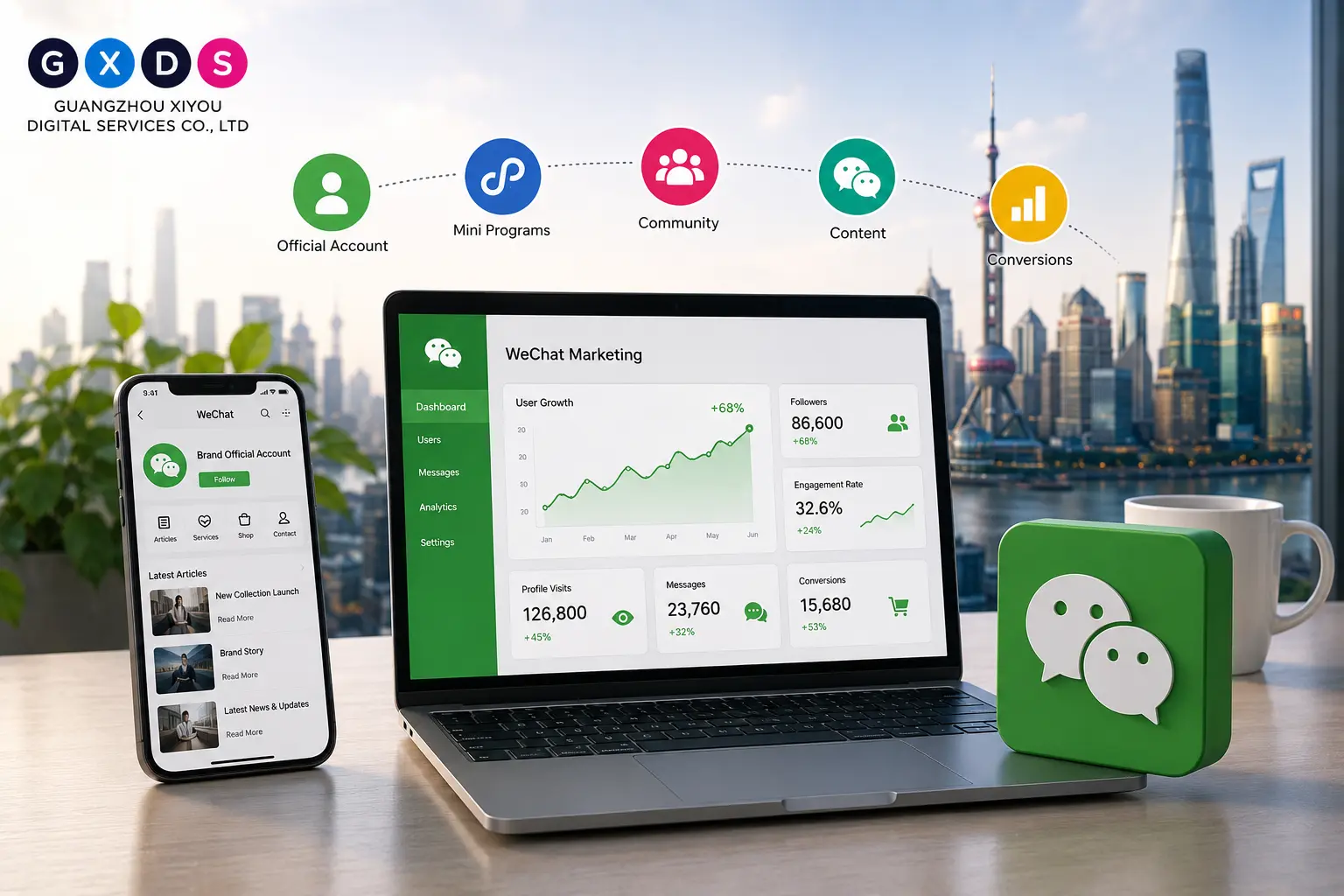
WeChat marketing for foreign brands starts with choosing the right account type and verifying it correctly, since almost everything else, content, mini-programs, payments, depends on getting that foundation right first. With WeChat reaching well over a billion monthly users, it functions less like a marketing channel and more like the operating system many Chinese consumers use to discover, evaluate, and stay connected to brands. Here’s how foreign companies use it properly.
Why WeChat Is Different From Every Other Platform Brands Use
WeChat combines messaging, payments, content, and mini-programs into a single ecosystem, so a WeChat strategy touches customer service, e-commerce, and content marketing all at once, not just posts and ads. That breadth is also why brands that treat it like a typical social channel, occasional posts, no deeper integration, get a fraction of the value. Pairing WeChat activity with broader visibility from a SEO company in China tends to compound results, since discovery and retention end up reinforcing each other.
Choosing the Right Account Type
Subscription Account vs Service Account
Subscription accounts suit brands focused on regular content and thought leadership, while service accounts unlock deeper functionality, menus, customer chat, mini-program integration, at the cost of posting less frequently. Getting this choice right early avoids a rebuild later, especially if e-commerce or booking functionality is part of the plan. A web development company in China familiar with WeChat’s backend can help match the account type to the actual business goal instead of a default choice.
Verification and Compliance for Foreign Companies
Full verification and the more advanced features generally require a registered entity or a local partner who can complete the process on the brand’s behalf, similar in spirit to the entity requirements covered in our ICP license guide. Brands that treat WeChat verification and website compliance as one coordinated process, rather than two separate headaches, tend to launch faster with fewer surprises. A digital marketing agency in China that handles both in parallel is usually the fastest path through this stage.
Using Mini Programs to Drive Conversions
Mini programs, lightweight apps that run inside WeChat, now serve hundreds of millions of daily users across bookings, services, and full e-commerce checkouts. For brands selling directly to Chinese consumers, a mini program with mini-program development support behind it is increasingly the expected experience rather than a nice-to-have. Driving traffic into that mini program works well through a Google Ads agency in China campaign for broader search intent, or Meta Ads campaigns for exporters for B2B brands running parallel campaigns across Western and China-facing channels.
Building Trust Through Communities and Local Content
WeChat rewards brands that feel like an ongoing relationship rather than a broadcast channel. Community groups, direct customer service, and consistent content all build that over time, and KOC marketing integrated into WeChat content adds the authentic, peer-level trust that brand-produced content alone struggles to match.
How Long Does It Take to Build a WeChat Presence?
Account setup and verification typically take a few weeks once documentation is ready. Meaningful content and community traction generally build over three to six months of consistent activity, and mini-program adoption, if part of the strategy, tends to follow once the account itself has an established, trusted following.
Conclusion
WeChat isn’t a single tactic; it’s an ecosystem that touches content, customer service, and e-commerce all at once, which is exactly why foreign brands that treat it as an afterthought rarely get much from it. Getting the account type, verification, and mini-program strategy right from the start makes everything that follows, community building, conversions, retention, considerably easier.
FAQs
Q1. What is a WeChat official account?
It’s a verified brand presence on WeChat that lets a company publish content, message followers, and, depending on account type, offer customer service or in-app purchases.
Q2. What’s the difference between a WeChat subscription account and a service account?
Subscription accounts are built for regular content publishing, while service accounts unlock deeper functionality like menus, customer service chat, and mini-program integration, but post less frequently.
Q3. Do foreign companies need a Chinese entity for WeChat marketing?
Full verification and advanced features generally require a registered entity or a local partner who can complete verification on the brand’s behalf.
Q4. How long does WeChat account verification take for a foreign company?
Timelines vary, but foreign brands should generally plan for several weeks once documentation is complete, longer if a local partner needs to be engaged first.
Q5. What is a WeChat mini program and do I need one?
A mini program is a lightweight app that runs inside WeChat, used for everything from bookings to full e-commerce checkouts. It’s not mandatory, but it’s increasingly expected for brands selling directly to consumers.
Q6. Can foreign companies sell products directly through WeChat?
Yes, primarily through mini programs integrated with WeChat Pay, though this typically requires the right account type and backend development support.
Q7. Is WeChat marketing worth it for a small foreign brand?
It depends on the audience. For B2C brands targeting Chinese consumers, WeChat is close to essential; for narrow B2B categories, a lighter-touch presence is often enough.
Q8. How often should brands post on WeChat?
It depends on account type and audience expectations, but consistency matters more than frequency, since irregular posting undermines the trust WeChat content is meant to build.