
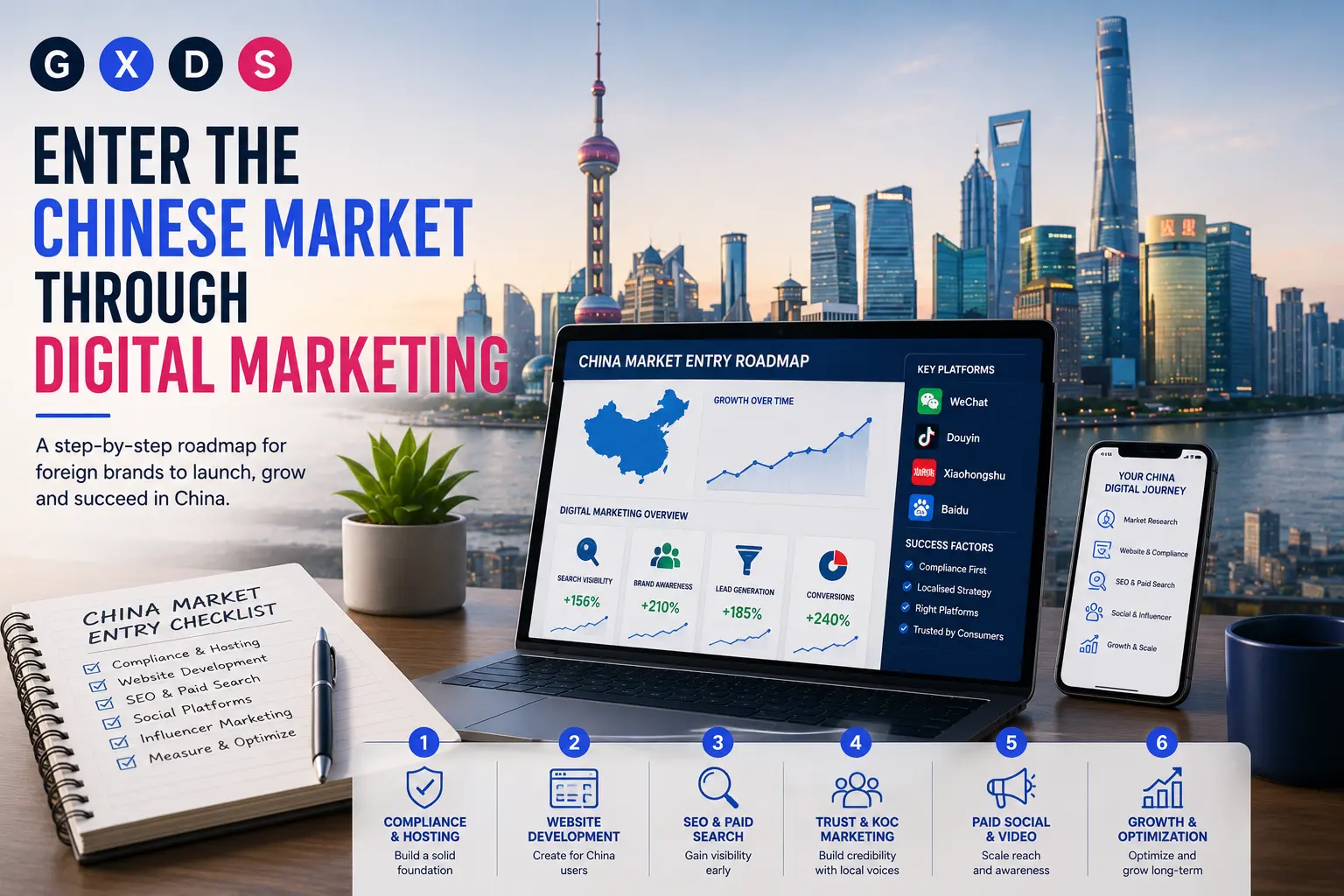
Entering the Chinese market through digital marketing means building compliant infrastructure, local search visibility, and platform presence before spending heavily on growth, not after. Brands that jump straight to advertising without this foundation typically waste budget sending traffic somewhere it has no reason to trust. Here’s the order that actually works.
Why Digital Marketing Is the Practical Entry Point Into China
Physical market entry into China, entities, warehouses, distribution, takes months and significant capital. Digital marketing lets brands test demand, build recognition, and start generating leads or sales well before that infrastructure is fully in place. With well over a billion internet users already online in China, according to the China Internet Network Information Center, the addressable audience is there from day one. The work is building a presence Chinese consumers actually trust.
Step 1: Get Compliance and Hosting Right First
Every other channel depends on this step. A site that loads slowly or isn’t properly registered undermines SEO, paid campaigns, and brand trust all at once. Our ICP license guide covers exactly what’s required and how long the process realistically takes, so it can run in parallel with other market entry work rather than blocking it.
Step 2: Build a Website Made for China, Not a Translated One
Why a Local Web Development Partner Matters
A translated version of an existing global site rarely performs well for Chinese visitors, technically or culturally. Working with a web development company in China from the start means the site is built for local hosting, local user behaviour, and local payment expectations, instead of retrofitted later.
Step 3: Establish Search Visibility Early
Organic and Paid Working Together
Search is usually where the earliest, most qualified interest shows up. Bringing in a SEO company in China early builds visibility that compounds over the entry period, while a Google Ads agency in China fills the gap with immediate traffic while organic rankings are still developing.
Step 4: Build Trust Through Local Voices Before Scaling Spend
New entrants have no track record with Chinese consumers yet, which makes trust the hardest thing to buy directly. KOC marketing closes that gap by putting real product experiences in front of early audiences before broader advertising spend ramps up, so that spend lands on an audience already primed to trust the brand.
Step 5: Layer in Paid Social and Video for Reach
Once the foundation is in place, paid social and video accelerate awareness considerably. Running Meta Ads campaigns alongside China-specific platforms, and introducing the brand through YouTube promotion services for audiences researching the brand before it fully launches, both extend reach beyond what organic content alone can do in the early months.
How Long Does China Market Entry Take Through Digital Marketing?
Compliance and website work typically take four to eight weeks and can run alongside early SEO setup. Most brands see initial traction, search visibility, first leads, early social engagement, within three to six months. Sustained, durable growth generally develops over six to twelve months as search authority, content, and platform trust all compound together.
Conclusion
China market entry through digital marketing works best as a sequence, not a single campaign: compliance and website first, search visibility early, trust-building before scale, and paid reach layered on top once the foundation holds. Brands that follow this order avoid the wasted spend that comes from marketing to an audience that has nowhere trustworthy to land. If you’re planning an entry into China, talk to our team to map out the right sequence for your category.
FAQs
Q1. What’s the first step to entering the Chinese market through digital marketing?
Getting website hosting and registration compliance sorted first, since campaigns and content built on a non-compliant or slow site rarely perform well no matter how good the strategy is.
Q2. Do I need a Chinese entity to run digital marketing in China?
For most compliance steps, such as website registration, yes, either directly or through a registered local partner who can file on your behalf.
Q3. How much should a foreign brand budget for China market entry?
It varies widely by industry, but most brands spread initial budget across compliance and website setup, SEO, and a paid media test rather than one large campaign.
Q4. Can I use my existing global website to enter the Chinese market?
Technically yes, but performance and trust both suffer. A dedicated, natively built site hosted correctly for the region consistently performs better.
Q5. Which platform should a foreign brand prioritize first in China?
It depends on the category, but most B2B brands prioritize search visibility first, while consumer brands often lead with WeChat, Douyin, or Xiaohongshu.
Q6. How long does China market entry take through digital marketing?
Compliance and website work typically take four to eight weeks, early traction from SEO and paid media builds over three to six months, and sustained growth develops over six to twelve months.
Q7. Is paid advertising necessary for China market entry?
Not strictly, but it significantly speeds up the early testing phase while organic visibility and trust are still being built.
Q8. What’s the biggest mistake foreign brands make entering China digitally?
Spending on advertising and content before compliance and website infrastructure are in place, which wastes budget on traffic with nowhere credible to land.