
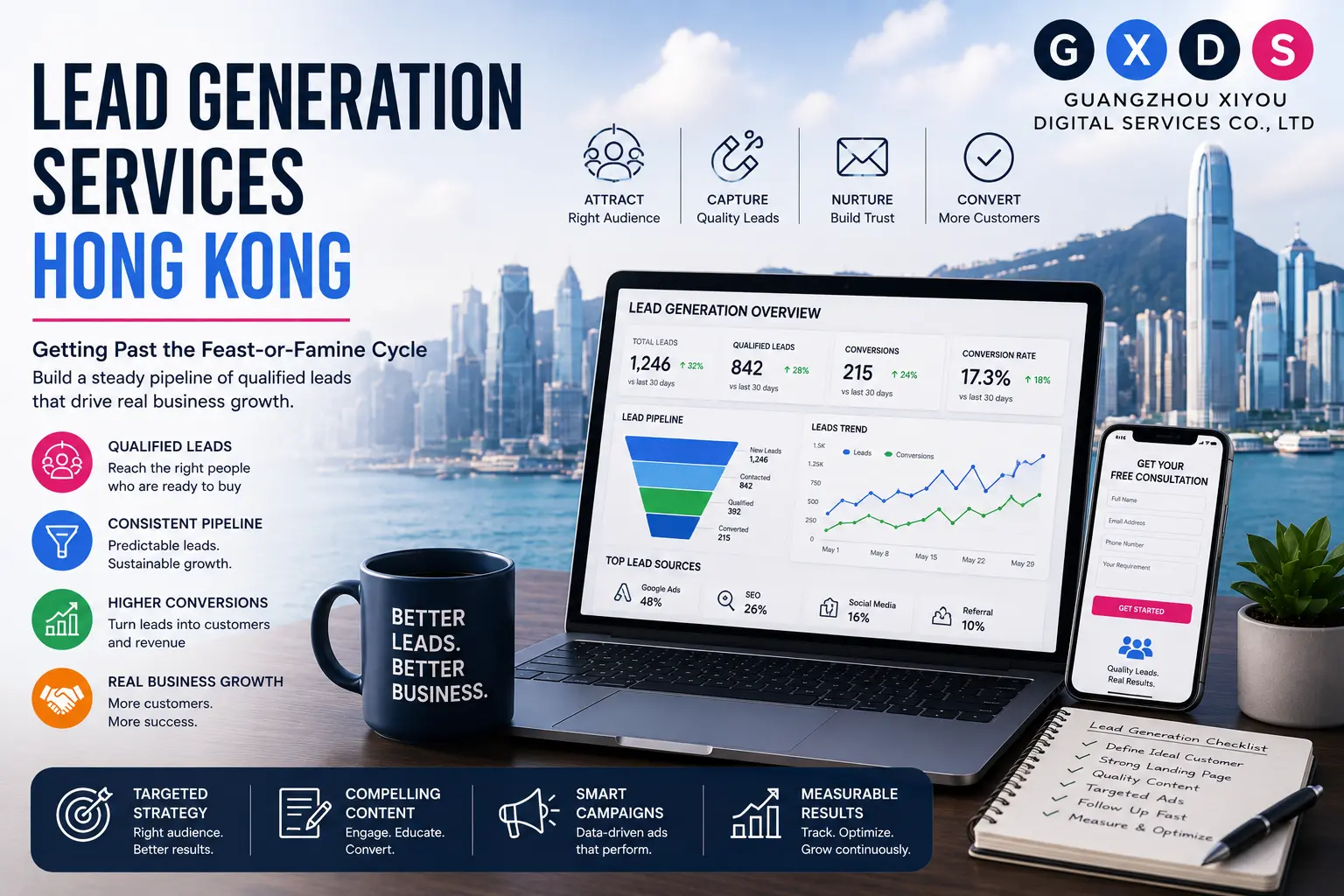
There’s a pattern almost every business owner in Hong Kong recognises, even if nobody likes admitting it out loud. Some months, enquiries pour in and the team can barely keep up. Other months, the phone goes quiet and everyone starts wondering what changed. That unpredictability isn’t bad luck — it’s usually a sign that leads are coming from wherever they happen to land, rather than from a system built to bring them in consistently.
This is exactly the gap that proper lead generation services Hong Kong companies invest in are meant to close. Not a single campaign that spikes and fades, but a repeatable way of finding people who are actually likely to buy, and staying in front of them until they’re ready to talk.
Why Referrals and Word of Mouth Eventually Stop Being Enough
Plenty of businesses grow their first few years almost entirely on referrals, and there’s nothing wrong with that — it’s often the cheapest, highest-trust way to get a customer. The problem shows up later, once growth targets get bigger than what word of mouth can realistically supply. Referrals are wonderful, but they don’t scale on command, and they say nothing about the hundred potential customers who’ve never heard of you because nobody happened to mention your name.
That’s usually the point where a business starts looking seriously at structured lead generation — not because referrals stopped working, but because they were never built to carry the whole load on their own.
What Good Lead Generation Actually Looks Like Day to Day
Strip away the buzzwords and lead generation really comes down to three honest questions: who exactly are we trying to reach, where do they actually spend their attention, and what would make them raise their hand? Everything else — the channels, the content, the follow-up sequences — exists to answer those three questions well and repeatedly.
For a business selling directly to consumers, that might mean well-targeted search and social campaigns paired with a landing page that makes the next step obvious. For a company doing B2B lead generation Hong Kong markets particularly reward, the process usually looks a little different and a little slower — because business buyers rarely act on impulse. They research, they compare, they loop in colleagues, and they need to trust you before a conversation even starts.
Why B2B Lead Generation Runs on a Different Clock
Selling to a business isn’t like selling to an individual shopper. There’s a longer research phase, more people involved in the final decision, and a much higher bar for proof that you can actually deliver. That means B2B lead generation Hong Kong companies succeed at tends to lean heavily on content that builds credibility early — case studies, straightforward explanations of how you solve a specific problem, and a website that makes it easy for a cautious buyer to find exactly what they need without digging.
It also means patience matters. A B2B enquiry that looks quiet for three weeks might simply be working its way through an internal approval process — which is precisely why consistent follow-up, not constant new outreach, is often what actually closes the gap between an early enquiry and a signed deal.
The Difference Between Sales Leads and Ones Actually Worth Chasing
Not every enquiry deserves the same amount of attention, and pretending otherwise burns out a sales team fast. A flood of sales leads sounds impressive on a report, but if most of them were never going to buy, all that volume does is bury the handful of real opportunities sitting underneath it.
Qualified leads are the ones actually worth prioritising — people who match your ideal customer profile, have a genuine need, and are far enough along that a conversation with them is likely to go somewhere. Getting to that point usually means asking a few sharper questions earlier in the process, rather than treating every form submission as equally promising.
Where Most of the Real Work Actually Happens
A lot of what drives consistent leads happens quietly, before a single ad ever runs — clear positioning, a website that actually explains what you do, and content that answers the questions your best customers are already asking. That’s why lead generation rarely works well in isolation from the rest of a business’s digital presence. Our SEO services team, for instance, spends real time making sure a site is actually findable by the people searching for what you offer — because no amount of paid traffic fixes a site nobody can find organically.
On the paid side, Google Ads campaigns can put your business in front of the right searcher the same day they’re looking, which is invaluable while a longer-term organic strategy is still building momentum.
And once someone does click through, what they land on matters just as much as what got them there — a site that’s slow or confusing on mobile quietly undoes all of that earlier work. A well-built website is often the difference between a visitor who leaves immediately and one who actually fills out the form.
Turning Leads Into Actual Business Growth
None of this matters unless it eventually shows up as real business growth — more signed clients, more repeat customers, a pipeline that doesn’t run dry the moment one campaign pauses. That’s the honest measure of whether lead generation is working: not how many names end up on a spreadsheet, but how many of them turn into relationships that keep the business moving forward.
Getting there consistently takes more than a single tactic. It’s the layering of visibility, trust, and timely follow-up, applied patiently over months rather than expected overnight from one clever campaign.
Why Businesses Bring Us In for This
We’ve sat across the table from enough business owners tired of feast-or-famine pipelines to know that what actually helps isn’t another one-off campaign — it’s a partner willing to understand the business well enough to build something that keeps working. Xiyou Digital Services builds lead generation around SEO, paid advertising, and web development together, so the leads you get aren’t just plentiful — they’re the kind worth following up on.
If there’s one thing worth remembering from all of this, it’s that a steady pipeline isn’t something that happens to a business — it’s something built, deliberately, one honest decision at a time about who you’re trying to reach and how you earn their attention.
Frequently Asked Questions
Q1. How long before lead generation starts producing real results?
Paid channels can bring in enquiries within days, while organic and content-driven efforts usually take a few months to build momentum. Most businesses see the strongest results once both are running together.
Q2. What makes B2B lead generation different from consumer lead generation?
B2B buyers typically take longer to decide, involve more people in the decision, and need more proof before committing — so the process leans more on credibility-building content and consistent follow-up than on quick, impulse-driven offers.
Q3. How do you tell a qualified lead from just another enquiry?
A qualified lead generally matches your ideal customer profile, has a genuine and current need, and is far enough along in their decision that a conversation is likely to lead somewhere — rather than someone simply browsing.
Q4. Can a small business realistically compete for leads in Hong Kong?
Yes — a smaller business with tightly targeted messaging and a fast-follow-up process often converts a higher share of its leads than a larger competitor spreading its efforts too broadly.