Search is changing. A few years ago, people only opened Google when they wanted an answer. Today, many also ask AI tools like ChatGPT or Gemini directly. This means businesses now need to think about two things instead of one: getting found on Google, and getting mentioned by AI.
For international brands trying to grow in China, this shift matters even more. You are not just competing for search rankings anymore — you are also competing to be the brand an AI assistant talks about when someone asks a question in your industry.
In this guide, we will break down SEO and GEO in plain, simple language, and explain what it means for your business.
What Is SEO?
SEO (Search Engine Optimization) is the practice of making your website easy to find on search engines like Google. It involves:
- Using the right keywords on your pages
- Making your website fast and easy to use
- Building quality backlinks from other trusted websites
- Creating content that answers what people are searching for
The goal of SEO is simple: when someone searches for something related to your business, your website shows up — ideally near the top.
If you want to understand how this applies specifically to ranking in search results, our SEO company in China page explains how we approach this for international brands.
What Is GEO?
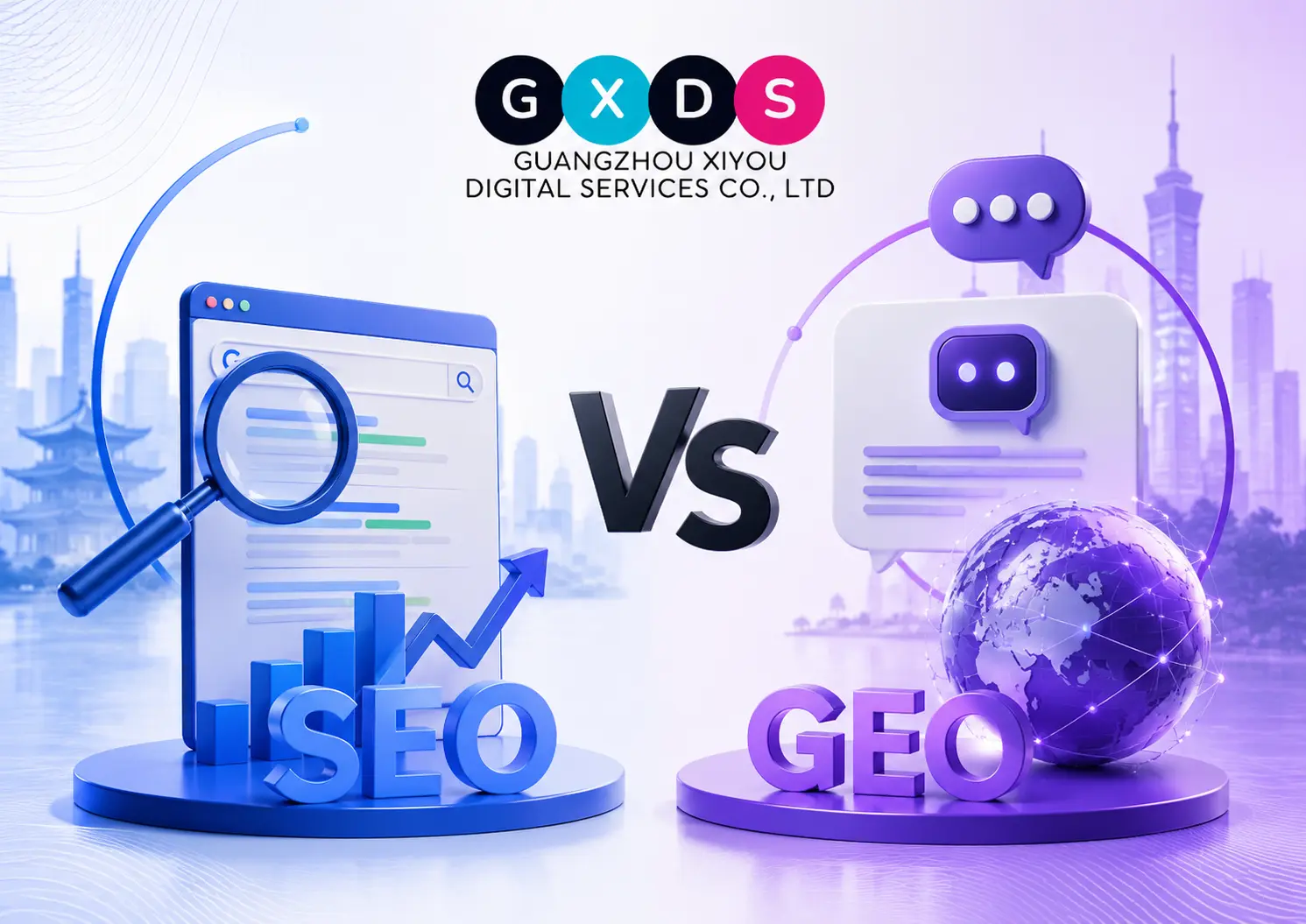
GEO (Generative Engine Optimization) is newer. Instead of optimizing to rank on a search results page, GEO is about making sure AI tools like ChatGPT, Gemini, or Perplexity mention your brand when they answer a question.
Here’s the simple difference:
- SEO helps you get found when someone searches.
- GEO helps you get mentioned when someone asks an AI a question.
AI tools read many websites, blend the information together, and then give a short answer. If your brand isn’t part of that mix, it simply won’t get named — even if your website is well written.
Why Ranking High on Google Isn’t Enough Anymore
Many businesses assume that if they rank well on Google, AI tools will automatically mention them too. This isn’t always true. AI tools often pull information from a different mix of sources than the ones that rank on page one of Google.
This means a brand can have a strong Google ranking and still be invisible in AI answers, and vice versa. That’s why businesses today need a strategy that covers both.
Simple Things That Help With Both SEO and GEO
You don’t need to overcomplicate this. A few basic habits go a long way:
- Write content that actually answers questionsDon’t just stuff keywords. Write clear, direct answers to the questions your customers are actually asking.
- Keep your information consistent everywhereYour business name, services, and details should look the same across your website, social profiles, and directories. This builds trust with both search engines and AI tools.
- Add structured data to your websiteSimple technical additions (like FAQ sections marked up properly) help both Google and AI tools understand your content more easily. This is part of the technical work we cover under our digital marketing services for clients entering the Chinese market.
- Build genuine authorityGetting mentioned by other trusted websites, publications, or industry sources helps both your search rankings and your chances of being cited by an AI tool.
- Keep your website fast and well-builtA slow, outdated website hurts your SEO and makes it harder for both users and search engines to trust your brand. This is why solid web development matters as much as content strategy.
Why This Matters More for Brands Entering China
China’s digital environment already works differently from the rest of the world — different platforms, different consumer habits, and different rules. Brands entering this market can’t just copy a global strategy and expect it to work.
The same applies to AI visibility. As more consumers use AI tools for research and recommendations, brands that don’t build genuine authority and consistent, high-quality content risk becoming invisible — even if their website technically “works.”
This is exactly why we help brands build a complete strategy, not just isolated tactics. If you’re not sure where your brand currently stands, our team can walk you through it — feel free to contact us for a simple, no-pressure conversation.
A Few Other Ways to Build Visibility
SEO and GEO aren’t the only channels worth paying attention to. Video content, for example, continues to grow in importance for brand discovery. If you’re exploring this, our YouTube promotion services page covers how video can support your overall visibility strategy.
Final Thoughts
SEO and GEO aren’t competing strategies — they work together. One helps you get found. The other helps you get recommended. Businesses that invest in both today will have a real advantage as more of their audience starts researching brands through AI tools instead of traditional search alone.
If you want to learn more about who we are and how we help international brands grow in China, visit our about us page, or check out more insights on our blog.
For details on how we handle information on this website, see our privacy policy, terms and conditions, and disclaimer.