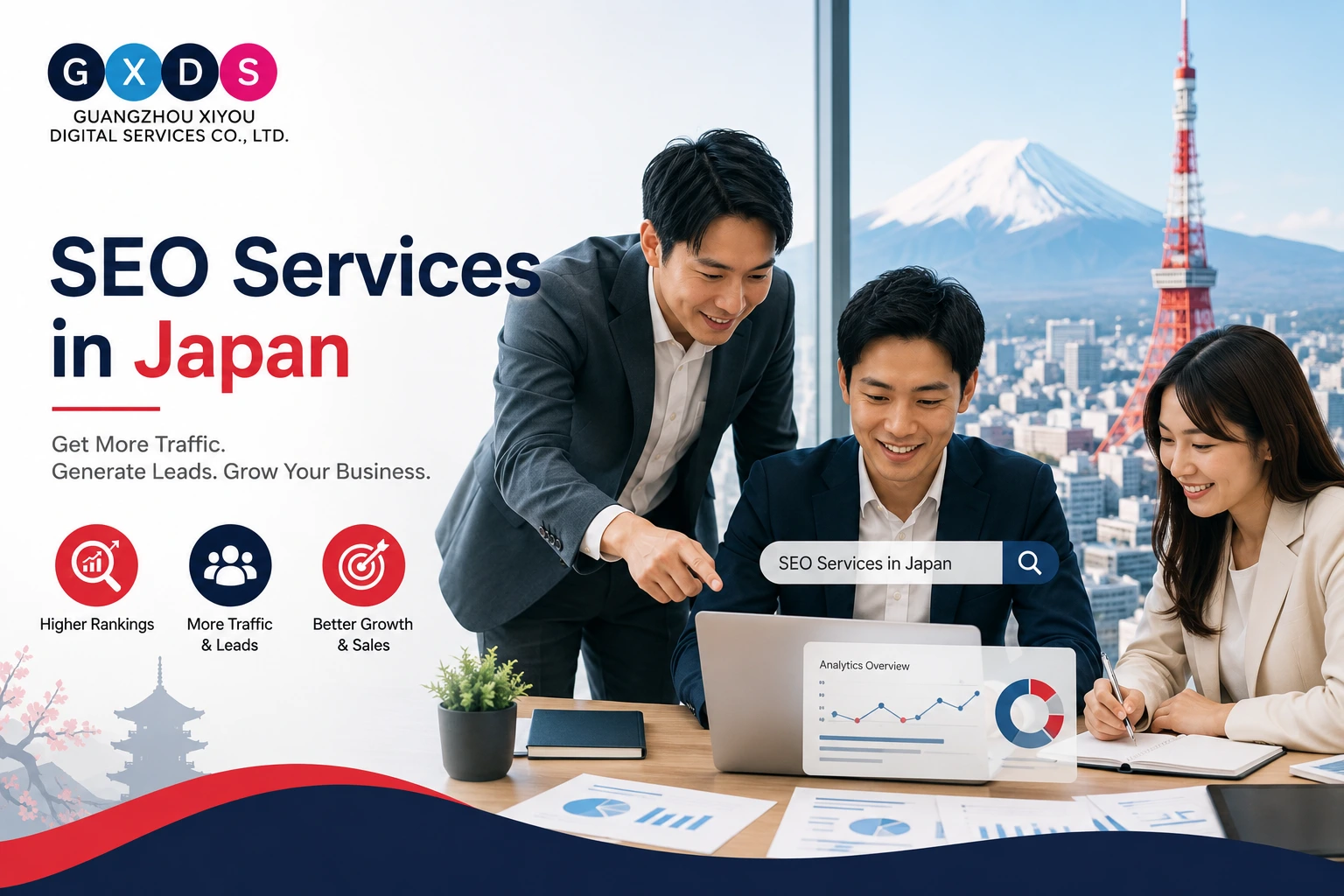
Japan is one of Asia’s most valuable digital markets. Consumers here are informed, research-driven, and highly selective about the businesses they choose to contact or buy from. If your website does not show up when they are searching, a competitor will take that opportunity every single time.
SEO services in Japan help your business earn consistent search visibility without paying for every click. This guide covers what SEO services are, how they work for the Japanese market, what types of support are available, and how to choose the right agency to work with.
What Are SEO Services?
SEO, or search engine optimisation, is the process of making your website easier for search engines to find, understand, and recommend to users. When done properly, it helps your pages appear higher in search results when people look for products or services like yours.
SEO services cover a broad range of actions including keyword research, technical fixes, content creation, link building, and performance tracking. These activities work together over time to build a website that earns steady organic traffic from search engines.
Why SEO Matters More Than Ever
Search behaviour has changed significantly. Most buyers today do their research online before making any contact with a company. They read service pages, compare options, check reviews, and look for proof of credibility. If your business does not appear at the right stage of that research process, you miss the inquiry entirely.
Paid advertising can fill short-term gaps, but organic search provides something more valuable: consistent, compounding traffic from people who are already looking for what you offer. A well-executed SEO strategy builds that visibility sustainably over time.
How Search Engines Help Businesses Grow
Search engines like Google act as digital matchmakers. They connect people who have a question or a need with businesses that can help them. Ranking well for searches like “SEO agency in Tokyo” or “Japanese market entry services” puts your business in front of buyers who already have intent.
The key is matching your content to what real buyers are actually searching for, not just what you assume they want. That is where professional keyword research and content planning make the biggest difference.
Why Businesses in Japan Need a Dedicated SEO Strategy
Japan is not a market where generic SEO delivers reliable results. The language, search habits, trust expectations, and content preferences of Japanese buyers are distinct enough that a strategy built for another market often underperforms here.
A Highly Competitive Digital Market
Japan has strong domestic competition across almost every industry. Local companies invest heavily in content, technical SEO, and brand presence. International businesses entering Japan face the added challenge of building trust in a market where local brands already have an established advantage.
More global brands are also investing in Japan SEO now than five years ago. A basic website is no longer sufficient to compete for visibility. A structured and well-maintained SEO strategy is what separates businesses that get found from those that stay invisible.
Japanese Buyers Research Thoroughly Before Buying
Japanese consumers are known for their careful, detail-oriented approach to purchasing decisions. They compare companies across multiple touchpoints, read full service pages, look for trust signals like certifications and case studies, and often visit a website several times before making contact.
This behaviour means your website needs to do real work. Pages that are thin, vague, or hard to navigate lose buyers to competitors who provide clearer and more complete information. SEO is not just about rankings — it is about building the kind of online presence that earns trust.
Language and Localisation Requirements
To reach Japanese-speaking buyers effectively, content needs to be written in proper Japanese, not machine-translated. Keyword research for Japan must account for how Japanese users phrase their searches, which often differs significantly from direct translations of English terms.
At the same time, many businesses operating in Japan also need English content for international buyers, expats, and global teams. A full Japan SEO strategy often needs to serve both audiences well.
Search Engine Landscape in Japan
Google dominates search in Japan with a significant market share, but Yahoo Japan also holds a meaningful portion of the search market, particularly among older users. The good news is that Yahoo Japan’s organic results are largely powered by Google’s algorithm, which means strong Google SEO typically supports visibility on both platforms.
Understanding the nuances of how each engine handles indexation, local signals, and content quality helps your pages perform across the full search landscape in Japan.
Types of SEO Services Available
A strong SEO plan is not a single action. It combines multiple disciplines that work together to improve your website’s visibility, authority, and ability to convert visitors into leads or buyers. Below are the core types of SEO services your business may need.
1. Keyword Research
Keyword research is the foundation of any effective SEO campaign. It identifies the exact phrases your potential customers use when searching online, then maps those phrases to the right pages on your website.
For Japan, effective keyword research covers Japanese-language search terms, industry-specific vocabulary, buyer-intent phrases, and local variations by city or region. It also looks at search volume, competition level, and how likely each term is to bring visitors who are ready to take action.
Poor keyword targeting is one of the most common reasons SEO campaigns fail to deliver leads. Ranking for terms that attract the wrong audience or have no commercial value wastes time and budget.
2. On-Page SEO
On-page SEO improves the elements within each page of your website to help search engines understand what the page is about and why it should rank for relevant searches.
This includes optimising page titles, meta descriptions, header tags, body content, image alt text, internal links, and calls to action. On-page work also ensures each page has a clear focus, does not duplicate other pages on your site, and provides a useful experience for visitors.
Good on-page SEO is not just for search engines. Pages that are well-structured, clear, and easy to navigate also convert better.
3. Technical SEO
Technical SEO addresses the infrastructure of your website — the elements that determine whether search engines can crawl, index, and understand your pages correctly. Even excellent content will underperform if a website has significant technical problems.
Common technical SEO tasks include:
- Improving page load speed on desktop and mobile
- Fixing broken links and redirect errors
- Resolving crawl errors and indexation issues
- Implementing structured data markup for rich results
- Removing duplicate content and canonicalisation issues
- Ensuring mobile display is correct across all screen sizes
In Japan, where users expect fast, professional website experiences, technical performance also directly affects whether visitors stay on your pages or leave.
4. Local SEO
Local SEO helps your business appear in search results when people search for services in a specific city or region. For businesses with a physical presence or those targeting buyers in particular Japanese cities, local SEO is a critical part of the overall strategy.
This includes optimising your Google Business Profile, building consistent local citations, earning location-relevant backlinks, and creating pages that target specific cities such as Tokyo, Osaka, Kyoto, Yokohama, Nagoya, and Fukuoka.
5. E-Commerce SEO
For businesses selling products online in Japan, e-commerce SEO focuses on the unique challenges of product and category page visibility. This includes optimising product titles, descriptions, and images, improving category page structure, fixing duplicate product page issues, and targeting shopping-specific search terms.
E-commerce SEO in Japan also needs to account for how Japanese consumers search for products, which often involves brand names, model numbers, and specific descriptive terms rather than generic keywords.
6. Content Marketing and SEO Content
Search engines reward websites that consistently publish useful, well-written content. Content marketing as part of an SEO strategy involves creating blog posts, guides, FAQs, comparison articles, and service page expansions that target specific keyword opportunities and answer real buyer questions.
For the Japanese market, content quality standards are high. Thin, generic, or poorly researched content rarely performs well. Pages need clear structure, accurate information, and content depth that gives users a genuine reason to read and return.
A well-planned content strategy also creates opportunities to link related pages together, strengthening your overall site structure and improving how search engines understand your website.
7. Link Building
Backlinks — links from other websites pointing to yours — remain one of the most important factors in how search engines assess the authority and credibility of a website. Building high-quality backlinks takes time and sustained effort, but the impact on rankings can be significant.
Effective link building in Japan focuses on earning links from relevant local industry sources, reputable Japanese media, business directories, and partner organisations. Low-quality or irrelevant link building can harm rather than help rankings, so this work requires a careful and strategic approach.
Benefits of Hiring a Professional SEO Agency
Many businesses attempt SEO in-house but find that progress is slow or inconsistent. An experienced SEO agency brings a team with the skills, tools, and experience to deliver results more efficiently and reliably.
More Qualified Website Visitors
An SEO agency helps your website attract visitors who are already searching for what you offer. This is fundamentally different from display advertising, which reaches people regardless of their current intent. Traffic from SEO tends to convert at a higher rate because the intent is already there.
Sustained Improvement in Search Rankings
A professional agency does not just chase quick wins. It builds a website that improves steadily over time through a combination of technical fixes, content growth, and authority building. Rankings earned through proper SEO are more stable and difficult for competitors to displace than those built on shortcuts.
More Leads and Inquiries
Better rankings bring more visitors, but the real goal is more leads. A good SEO agency ensures that the pages bringing in traffic also have clear paths to conversion — contact forms, click-to-call buttons, quote request options, and relevant calls to action that guide buyers toward making contact.
Stronger Online Visibility Across Multiple Search Points
SEO improves visibility not just on your homepage but across every page of your website. Service pages, blog posts, FAQ content, location pages, and product pages can all attract search traffic independently. This creates a much stronger and more resilient online presence than relying on a small number of ranked pages.
Better Return on Marketing Investment Over Time
Paid advertising delivers traffic as long as you continue paying. SEO builds an asset. The rankings and authority your website earns through SEO continue delivering traffic and leads long after the initial work is done. For most businesses, organic search generates a lower cost per lead over time than paid channels.
Common SEO Mistakes Businesses Make in Japan
Understanding what to avoid is just as important as knowing what to do. These are the most frequent reasons SEO efforts in Japan fail to deliver results.
Ignoring Technical Problems
Slow loading pages, mobile display errors, broken internal links, and indexation problems are all issues that can prevent good content from ever being found. Technical SEO is not optional — it is the foundation that all other work depends on. A website with significant technical issues will underperform regardless of how much content is published or how many backlinks are earned.
Targeting Keywords with No Buyer Intent
High search volume does not always mean high value. Many keywords bring informational visitors who are researching topics but have no immediate intention to buy or contact a company. An effective keyword strategy prioritises terms that align with buyer intent — people actively looking for a service, product, or solution.
Publishing Thin or Underdeveloped Content
In Japan especially, content quality is a strong signal of brand credibility. Pages with minimal information, generic descriptions, or poorly developed arguments rarely rank well or convert visitors effectively. Every page on your website should aim to be the most genuinely useful resource available for the topic it covers.
Failing to Build Internal Links
Internal links connect pages on your website and help search engines understand the relationship between different pieces of content. Without a deliberate internal linking strategy, authority is not distributed effectively across your site, and users may not navigate to pages that are directly relevant to their needs.
Not Tracking the Right Metrics
Traffic numbers alone do not show whether SEO is delivering business value. The metrics that matter include rankings for target keywords, organic traffic by landing page, lead volume from organic search, conversion rates, and bounce rates on key pages. If you are not tracking these numbers, you cannot make informed decisions about what to improve.
How to Choose the Right SEO Company for Japan
Not all SEO agencies deliver equal results. Choosing the right partner requires asking the right questions and evaluating answers carefully.
Look for Demonstrated Experience with Japan or Similar Markets
An agency that has successfully improved rankings and driven leads for businesses in Japan or comparable competitive markets will have transferable knowledge that accelerates your results. Ask specifically about keyword research, content strategy, and technical work they have completed for similar projects.
Ask About Specific Process, Not Vague Promises
Any agency worth working with should be able to describe exactly how they approach an engagement from start to finish. This should include an initial website audit, competitor analysis, keyword research, a content plan, technical priorities, link building approach, and regular reporting cycles.
Be cautious of agencies that make guarantees about specific rankings. No ethical SEO agency can promise a number one position on Google. What they can commit to is a structured, transparent process focused on measurable improvement.
Evaluate Their Reporting Transparency
Regular, clear reporting is one of the most important aspects of a productive SEO partnership. Reports should show ranking changes for target keywords, traffic growth or decline by page, completed work in the period, results of that work, and a clear plan for the next period. If an agency’s reporting is vague or hard to understand, that is a warning sign.
Check Whether They Understand Both SEO and Business Goals
The best SEO agencies understand that rankings are not the end goal. Leads, sales, and business growth are. An agency that connects SEO work to business outcomes will produce more relevant strategies and take more ownership over actual results.
Why Guangzhou Xiyou Digital Services
Guangzhou Xiyou Digital Services supports businesses across digital marketing, SEO, paid advertising, and web development. For businesses entering or growing within the Japan market, our team brings a structured, research-driven approach to SEO that prioritises real business results.
We begin with a detailed understanding of your market, website, and competition before building any plan. Explore our full range of services including SEO services, Google Ads management, and web development to understand how we support end-to-end digital growth.
Research Before Strategy
We do not apply a standard template to every client. Every engagement begins with a proper audit of your website’s technical health, a review of your competitive landscape, and keyword research that reflects real buyer behaviour in your target market.
Content Built for Japan
Whether your target audience speaks Japanese, English, or both, our content approach prioritises accuracy, depth, and relevance over word count. Pages are built to inform, build trust, and guide visitors toward action.
Transparent Reporting on What Matters
We report on the metrics that connect to business value: keyword rankings, organic traffic, lead enquiries, page performance, and completed deliverables. Every reporting period includes a clear summary of what was done and what is planned next.
Integration with Paid Channels
SEO and paid advertising are strongest when they work together. Our team can support both channels, helping your business capture search demand at every stage of the buyer journey. Learn more about our
SEO and paid advertising work together well when managed by one team. Learn more about how we approach Google Ads campaigns alongside organic SEO to capture demand at every stage.
Faqs
1. What are SEO services in Japan?
SEO services in Japan include all the activities that help your website appear more prominently in Japanese search results. This covers keyword research for Japanese search behaviour, technical improvements to your website, content creation in Japanese and English, local SEO for Japanese cities, link building from relevant local sources, and regular performance reporting.
2. How long does SEO take to deliver results in Japan?
Most websites need several months to show clear, measurable progress from SEO. The exact timeline depends on the current health of your website, how competitive your target keywords are, the volume and quality of content you publish, and how consistently the work is maintained. Businesses with significant technical issues may see faster results after those are fixed. Businesses entering new keyword categories typically need longer.
3. Do I need Japanese-language content for SEO in Japan?
If you want to reach Japanese-speaking buyers, then yes — Japanese content is almost always necessary. Machine-translated content rarely performs well because it does not read naturally and may contain inaccuracies that damage trust. High-quality Japanese content written for your target audience is one of the most valuable investments you can make in Japan SEO.
4. Is Google the main search engine in Japan?
Google holds the largest share of search traffic in Japan. Yahoo Japan also has a significant user base, particularly among certain demographics. Since Yahoo Japan’s organic results are powered by Google’s algorithm, optimising for Google typically covers both platforms effectively.
5. How much do SEO services in Japan cost?
Pricing depends on the scope of work required: website size, keyword competition, existing technical issues, content volume, and whether paid advertising is included. A proper audit is the best starting point for understanding what your website needs and what an appropriate investment looks like.
Contact us at to discuss your situation and get a clear scope of work.
6. Can SEO help a foreign business establish a presence in Japan?
Yes. SEO is one of the most effective ways for foreign businesses to understand local demand, build brand visibility with Japanese buyers, and generate leads without relying entirely on paid advertising. The key is a strategy built on genuine local keyword research and content that meets the expectations of Japanese users.
7. What should I ask before hiring an SEO agency for Japan?
Ask about their process for keyword research specific to Japan, how they handle Japanese-language content, what technical SEO checks they run, how they build backlinks in the Japan market, what their reporting covers, and how they measure lead generation alongside rankings.
8. Can SEO and Google Ads work together?
Yes, and they often deliver stronger results when run in parallel. Paid ads provide immediate visibility while SEO builds long-term organic presence. Our team manages both channels and can design a strategy where each supports the other. See our Google Ads services and our digital marketing services overview for more information.